The End of 'Eternal Tourism' in Thailand: How Authorities Are Tightening the Screws on Visas and Taxes
6/6/2026
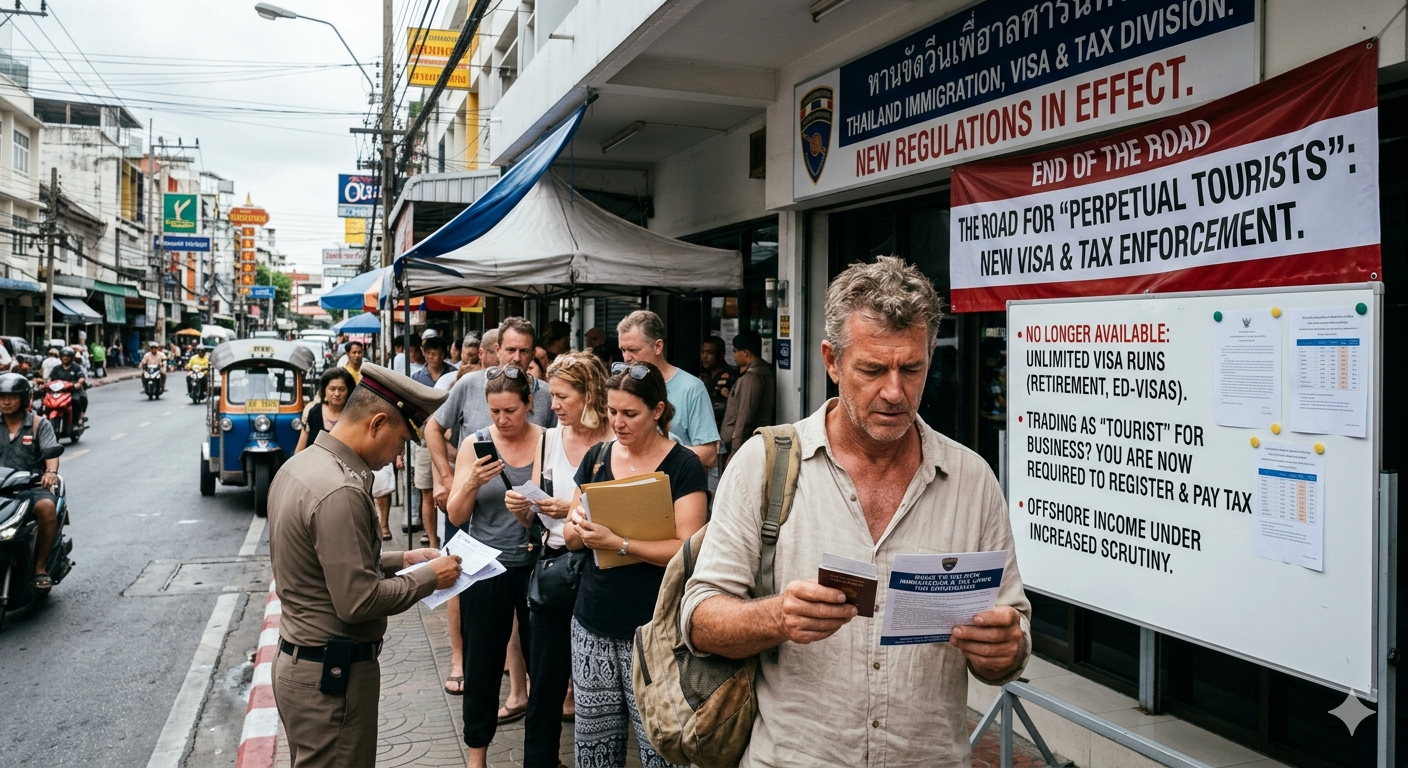
For many years, Thailand remained the world's capital of downshifting due to its legal leniency. Schemes like 'border runs' (exiting and re-entering the country in a single day), fake study visas through language schools without attending classes, and a complete lack of income monitoring allowed people to live here for years without paying anything to the state.
The kingdom's internal policy has changed radically. The government has set a course towards digital control and attracting only solvent, legal visitors. For those accustomed to living 'in the gray,' conditions have become toxic.
1. Visa Squeeze: Strict Limits on Visa-Free Stays and Border Runs
Thailand's Immigration Bureau has shifted from spot checks to systematic IT control at the borders.
The end of endless stamps. A digital tracking system has been officially launched. Foreigners with passports showing frequent entries and exits solely to renew tourist status are being massively denied entry at border checkpoints. A strict unwritten rule is in effect: no more than two border runs by land or air without a valid reason. If an immigration officer sees that you spend most of the year in the country on visa-exempt stamps, you will be turned away. The immigration service has already closed the door to thousands of 'tourists' who were effectively living in the country illegally.
Crackdown on fake ED visas. Student visas for Thai or English language courses have long been a legal loophole. Now, immigration police are conducting surprise raids at schools and checking for students' actual attendance in classes. If you are not in class or cannot string together two words in the language you claim to have been studying for six months, your visa will be revoked. For overstay of more than 30 days, you can now face an entry ban of up to 10 years.
2. Tax Trap: Control Over Worldwide Income
This is the main change, completely upending the cost of living in Thailand for affluent expats and remote workers. The enacted changes have fundamentally rewritten the rules for taxing foreign income.
The essence of the rule. Any individual (foreigner or Thai) who spends 180 days or more in a calendar year in Thailand automatically becomes a tax resident of the country.
What has changed. Previously, there was a loophole: if you earned money abroad in 2023 but brought it into Thailand in 2024, no tax was due. That loophole is now closed. Any funds earned abroad (remote work, dividends, crypto, rental income from property back home) and brought into Thailand by a tax resident are now subject to taxation under a progressive scale ranging from 5% to 35%.
Attempts at mitigation. The Revenue Department is discussing the introduction of a two-year window for tax-free transfers, but the overall trend is clear: if you live here permanently and spend money within the country using foreign cards or accounts, the tax office wants to see your declaration. Only money earned strictly before January 1, 2024, is protected, but to claim this, you must have ironclad bank statements on hand.
3. Total Digitalisation: Introduction of TDAC Replacing TM6 Form
The paper chaos that allowed violations to be hidden is becoming a thing of the past.
* Digital control. The old paper TM6 immigration cards have been replaced by the mandatory electronic Thailand Digital Arrival Card (TDAC) system. Every foreigner must register in the system before entering the country. This gives border officials and tax authorities end-to-end analytics: how many days you have spent in the country, where you are registered (via the TM30 system, which hotels and landlords must now file under threat of massive fines), and what your visa background is.
4. Legal Alternatives: How Much Does It Cost to Stay?
The state is not trying to drive foreigners away—it is making them pay for long-term stays. If you want to live in Pattaya hassle-free, the 'cheap' options are gone. You must choose from the legal, premium tracks:
DTV (Destination Thailand Visa). A five-year visa for digital nomads and freelancers. It allows stays of up to 180 days per entry. To qualify, you must show a balance of at least 500,000 baht in a foreign bank account and provide official remote work contracts or a portfolio.
Thailand Privilege (formerly Elite). The simplest but most expensive way to buy long-term peace of mind. Prices start from 900,000 baht for a five-year visa. No reporting, no tax checks at the border, no headaches—you simply purchase legal status.
LTR Visa (Long-Term Resident). A 10-year visa for highly qualified professionals working for companies in the EEC sectors, or for major investors. It requires proof of high legal income (from $80,000 per year).
Summary for the Article
Thailand has matured as a state. The era when Pattaya was a cheap, anarchic haven for people without documents or legal status is officially over. The city remains open and comfortable, but only for two categories: short-term tourists bringing in foreign currency, and legal expats or investors willing to pay for visas, disclose the source of their funds, and play by the rules.