Features of Pattaya
6/6/2026
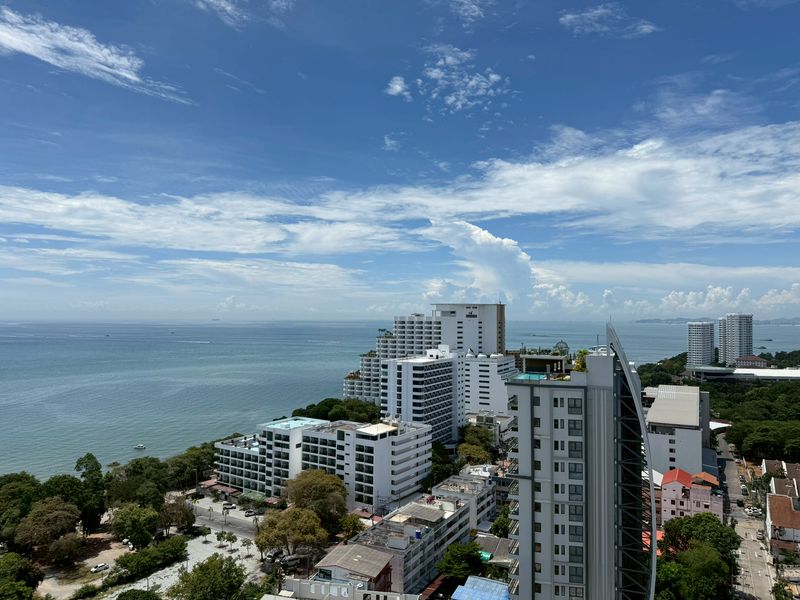
Pattaya long held a reputation as the 'world capital of debauchery' and a dirty budget resort. This stereotype is outdated.
Today, the city is being aggressively reshaped to meet the needs of the Eastern Economic Corridor (EEC). Billions of baht are being poured in to turn the region into a tech and business hub.
But if you arrive expecting a 'tropical paradise,' reality will quickly hit your wallet and nerves.
Below is an honest breakdown of the city’s features for those planning to live here, invest in property, or simply seek a quiet getaway.
Part 1.
City Transformation: Monorail, 5G, and Condo Investments
Pattaya is no longer just a 'weekend resort.' The city’s infrastructure is being rebuilt for long-term stays by a more affluent audience.
Infrastructure shift. On central streets, power lines are being buried underground, clearing up the Asian chaos. Plans include launching a monorail to ease traffic congestion. U-Tapao Airport is expanding into an international aviation hub, connected to Bangkok’s Suvarnabhumi by a high-speed railway. Travel time to Bangkok will drop to 45 minutes.
What this means for investors. The era of buying 'any condo for 10% annual returns' is over. The market is oversaturated with studios in giant resort projects that sit empty for months. Profitable properties are those geared toward expats: with proper workspaces, stable fiber-optic internet, and proximity to international schools (e.g., Rugby School or Tara Pattana).
Where the money is. The focus has shifted from short-term tourist rentals in the center to long-term leases (6 months to a year) by remote-working families and engineers employed by EEC enterprises.
Part 2.
Geography of Survival: How to Choose a Neighborhood and Stay Sane
Pattaya’s main feature is its strict neighborhood segregation. A wrong location choice means either sleepless nights from bar noise or hour-long trips for a simple carton of milk.
1. Naklua and Wongamat (North) — 'Quiet Pragmatism'
Reality: The most expensive and European-style area. Minimal package tourists and noise. High-quality properties, many high-rise condos on the first line.
Who it suits: Families with children and those who value peace but want to reach the center in 10 minutes.
2. Central Pattaya and Walking Street — 'No-Go Zone'
Reality: Looking for life or clean water here is pointless. Pattaya Beach is only good for sitting on a chair and watching the sunset—swimming is toxic to health. At night it’s noisy, with smells of sewage and legalized marijuana.
Who it suits: Tourists on a 3-day trip focused on bars and clubs. Accommodation is cheap, but long-term living is impossible.
3. Pratumnak — 'Expat Hill'
Reality: A green area between the center and Jomtien. Historically home to Russian-speaking and European expat communities. Many cafes with familiar food, playgrounds, and mid-range condos. Cozy Beach is relatively clean, sheltered in a bay.
Who it suits: Remote workers without a car. All amenities within walking distance.
4. Jomtien and Na Jomtien (South) — 'Family Compromise'
Reality: The longest beachfront. The promenade was recently renovated—the sandy area was expanded and chaotic vendors were cleared. The further south (toward Na Jomtien), the cleaner the water and the pricier the condos.
Who it suits: Morning joggers, families, and those wanting a sea view without paying northern prices.
Part 3.
Local Pragmatism: Transport, Food, and Where to Actually Swim
Transport paradox. Pattaya’s biggest plus is the baht bus (songthaew) for 10 baht. They run on fixed routes (Central Road, Second Road, Jomtien, Naklua). If your route is straightforward, you won’t need a car. If you need to go off the beaten path (e.g., to Sukhumvit Road for big malls like Makro or Decathlon), you’ll need a motorbike or order a Bolt/InDrive. Attempting to walk long distances in Pattaya is a mistake: sidewalks are either nonexistent or cluttered with food stalls.
The clean water problem. Accept it: within the city limits, there is no crystal-clear water 'like in the pictures.'
The most accessible option is Bali Hai Pier, from where a ferry takes you to Koh Larn Island (Tien or Samae beaches) in 30-40 minutes for 30-50 baht. On the mainland, alternatives include Sai Kaew (Military Beach) or Hat Nam Rin (Dancing Girl Beach) south of the city. You’ll need a car or taxi, about 30-40 minutes away.
Prices and daily life. Pattaya remains one of the cheapest places to live in Thailand compared to Phuket or Bangkok. Food courts at Terminal 21 or Central Festival let you have lunch for 50–80 baht. European food, cheese, and familiar products are expensive and sold in specialty chains (Foodmart, Villa Market).
Conclusion
Pattaya is a compromise. It loses to Phuket in ocean cleanliness and natural beauty, but completely beats it in terms of logistics, medical accessibility (Bangkok Pattaya Hospital is one of the country’s best facilities), and cost of living.
Choosing this city means choosing developed infrastructure and proximity to Bangkok, not seclusion with nature. If you accept the rules and pick the right area for your needs, the city becomes a comfortable base for business and life.